MonsterHunt Development Progress
The uRh2026 MonsterHunt overhaul is being rebuilt in structured phases so each system becomes a foundation for the next. The project has moved from scoring and four-team gameplay through radar and monster-level scaling, Phase 5 is now complete, delivering the custom uRh monster ecosystem. Development has moved into Phase 6: the Persistent Inventory Stash System.
Phase 4 Beta Preview
Preview footage from the Phase 4 Monster Leveling Framework beta.
Phase 1 — Kill-Based Scoring Conversion
Replace damage-based MonsterHunt scoring with authoritative points awarded when a monster actually dies.
- Kill-Based Scoring Conversion — replace the original MonsterHunt damage-based scoring system with a system that awards points when a monster is actually killed.
- Remove Damage Scoring — stop players from earning score simply by damaging monsters so repeated hits no longer inflate individual scores.
- Monster Death Detection — reliably identify when a monster has actually died and determine which player should receive credit for the kill.
- Kill Credit Assignment — award the monster’s point value to the player responsible for the killing blow.
- Monster Point Values — establish configurable point values so different monsters can reward different amounts when killed.
- Tier-Based Scoring Foundation — prepare scoring for Standard, Large/Elite, MiniBoss, and Boss classifications.
- Prevent Duplicate Awards — ensure a monster can only award its kill score once.
- Player Score Integration — update the normal MonsterHunt score so existing HUD, replication, and scoreboard systems continue using it.
- Bot Scoring Support — bots earn monster kill points using the same rules as human players.
- Dedicated Server Replication — calculate scores authoritatively on the server and replicate them correctly.
- Compatibility Foundation — prepare for monster tiers, four-team scoring, leveling, accolades, skills, and persistent player statistics.
Phase 2 — Four-Team MonsterHunt
Expand MonsterHunt from the traditional single-team structure into a configurable one-to-four-team system.
- Four-Team Framework — configurable 1–4 team MonsterHunt support.
- Team Identities — Red, Blue, Green, and Gold.
- Player Team Assignment — automatic assignment with balanced teams.
- Bot Team Assignment — bots use the same four-team balancing system.
- Team Rival Damage — establish damage rules between teammates and rival teams.
- Team Scoring — combine player MonsterHunt points into each team’s overall score.
- Team Placement — rank teams from 1st through 4th.
- Dynamic Team Scoreboard — adapt automatically for 1, 2, 3, or 4 active teams.
- Four-Team Scoreboard Layout — Red/Blue/Green/Gold presentation with player scores and team totals.
- Match Results — determine winning team and final placements when the objective is completed.
- MVP System — identify the highest-performing individual player.
- Dedicated Server Replication — replicate team assignments, scores, totals, placements, and scoreboard data.
Phase 3 — Radar Upgrades
Improve battlefield awareness with distinct player, bot, team, monster-tier, and special-role contacts.
- Player Contacts
- Human players use a circular icon.
- Bots use a square icon.
- Both are colored by team: Red, Blue, Green, or Gold.
- Monster Contacts
- Normal: light-gray circle
- Large: orange diamond
- Elite: bright-orange triangle
- MiniBoss: violet hexagon
- Boss: pulsing magenta star
- Flying: blue wing overlay
- Explosive: white blast-cross overlay
- Support: cyan medical-cross overlay
Phase 4 — Monster Leveling Framework
Give monsters real levels and scalable runtime statistics while preserving the identity of the original monster class.
- Monster Leveling Framework — monsters receive an actual level rather than relying only on stock statistics.
- Dynamic Monster Scaling — higher assigned levels progressively strengthen monsters.
- Player-Level Influence — prepare monster levels to respond to participating player levels.
- Level Range — support progression eventually scaling as high as Level 999.
- Health Scaling — scale maximum and starting health without permanently altering stock classes.
- Damage Scaling — increase attack strength as monster level rises.
- Speed and Combat Scaling — framework for movement speed, attack speed, reactions, and other combat properties.
- Base Stat Preservation — use original species statistics as the scaling foundation.
- Spawner Level Integration — spawners can assign or influence monster level.
- Runtime Scaling — apply calculated statistics when monsters spawn without requiring individually modified map actors.
- Level Replication — expose assigned level and relevant scaled information to clients for HUDs, health bars, and identification systems.
- Future Attribute Foundation — provide the framework Phase 5 uses for attributes, tiers, elemental characteristics, abilities, Elite identities, MiniBosses, and Bosses.
- Future Progression Integration — prepare integration with player leveling, skills, accolades, prestige, weapon progression, and persistent statistics.
Phase 5 — uRh Monster Classes & Identities
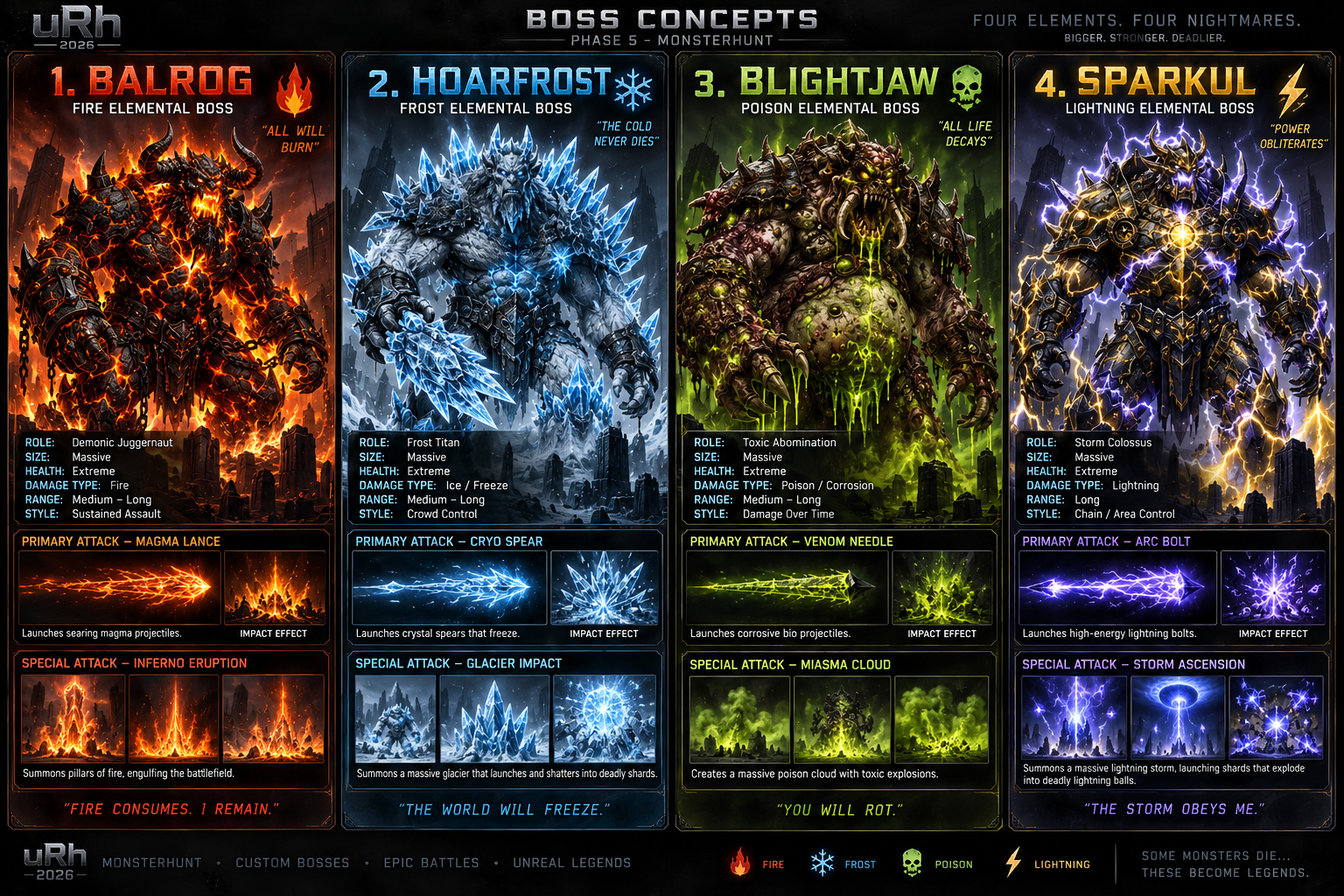
Completed custom monster ecosystem with meaningful identities, abilities, tiers, elemental combat roles, and progression hooks.
- uRh Monster Classes — begin creating our own monster classes rather than relying only on stock Unreal monsters.
- Monster Attributes — define the actual stats and attributes each monster receives and connect them to Phase 4 scaling.
- Monster Tiers — Standard, Elite, MiniBoss, and Boss identities become part of the monster itself.
- Elemental Characteristics — incorporate Physical, Fire, Ice/Frost, Lightning, Poison, and future elements.
- Monster Abilities — special attacks and behaviors appropriate to each monster type and tier instead of simply increasing health and damage.
- Leveling Behavior — monsters properly respond to the leveling system and future large-scale progression.
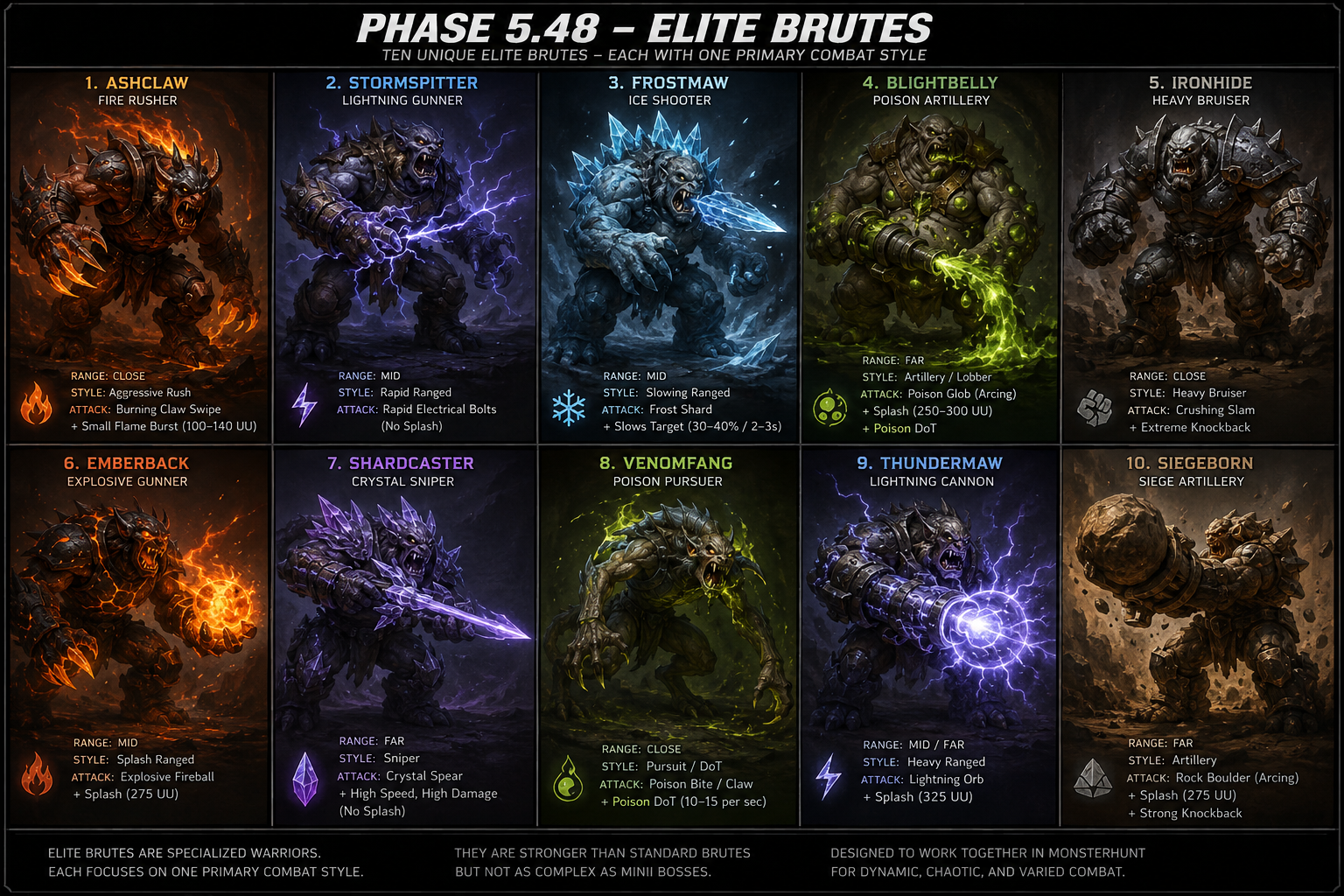
- Elite Identities — Elites become genuinely different encounters rather than ordinary monsters with boosted numbers.
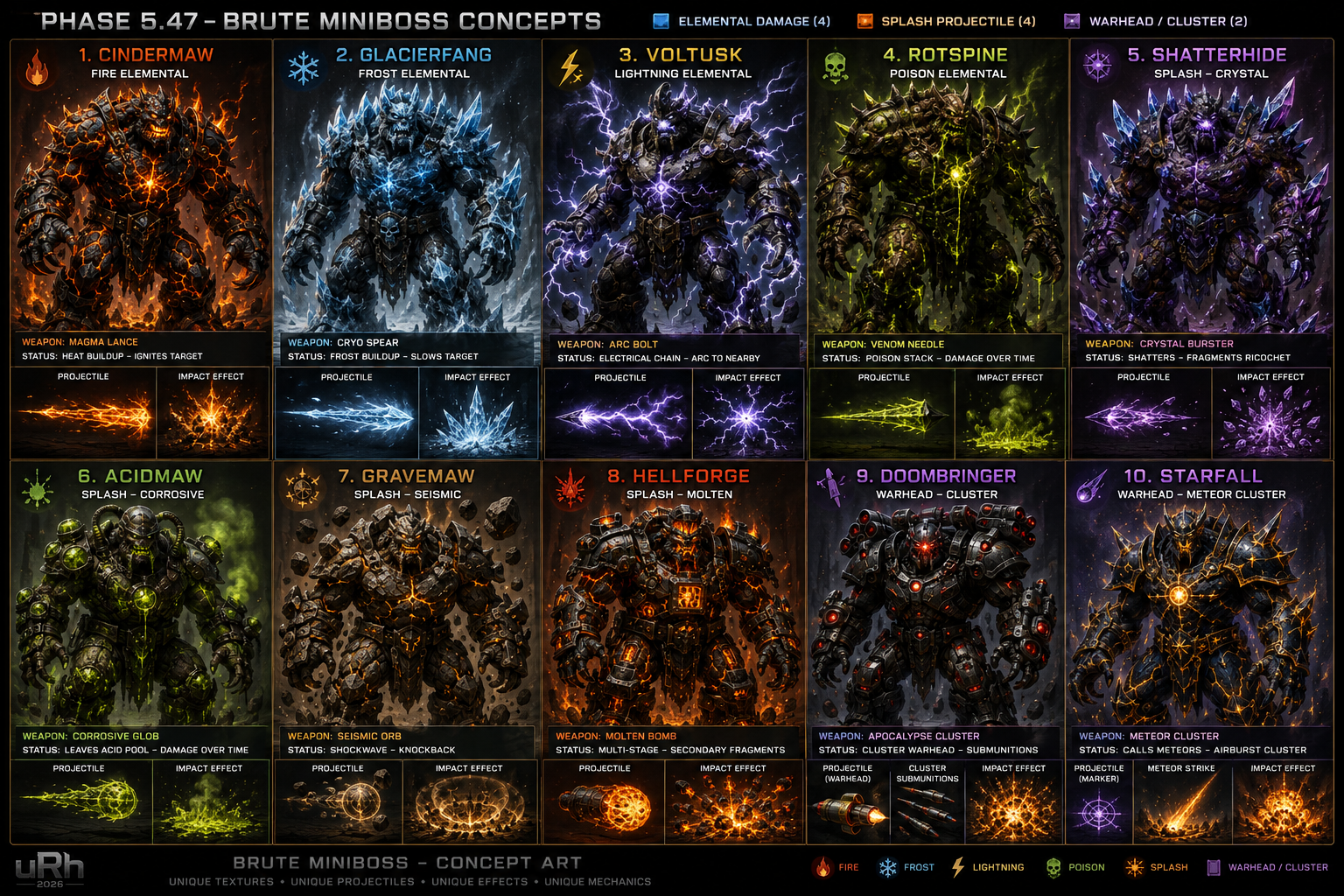
- MiniBoss Identities — unique abilities, presentation, statistics, and combat characteristics.
- Boss Identities / Evolution — bosses receive their own characteristics and can use the health-stage and boss systems created during Phase 4.
- Monster Statistics / Reward Hooks — expose information required by later leveling, skills, accolades, rewards, and persistent player-stat systems.
Phase 5 — Completed Monster Program
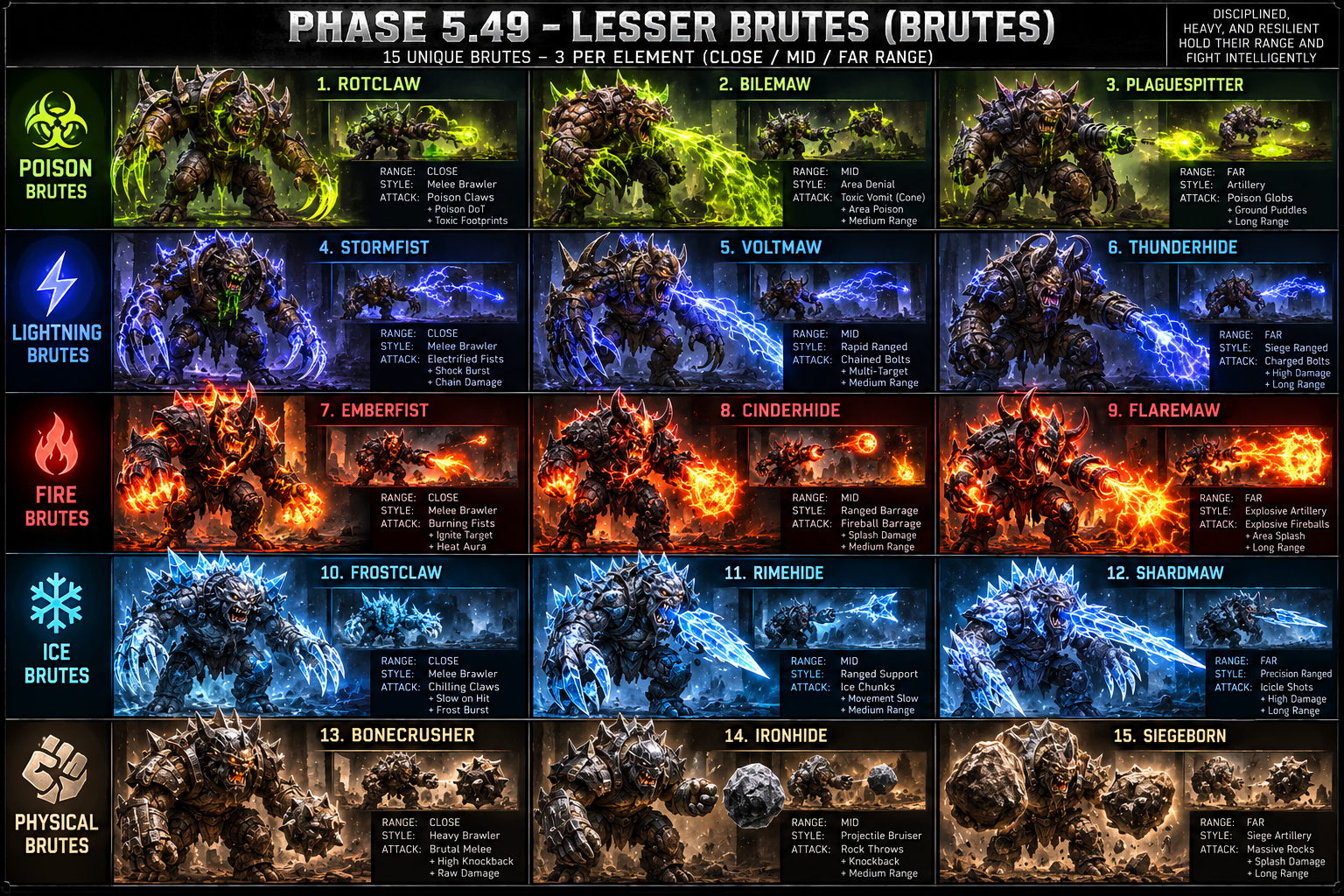
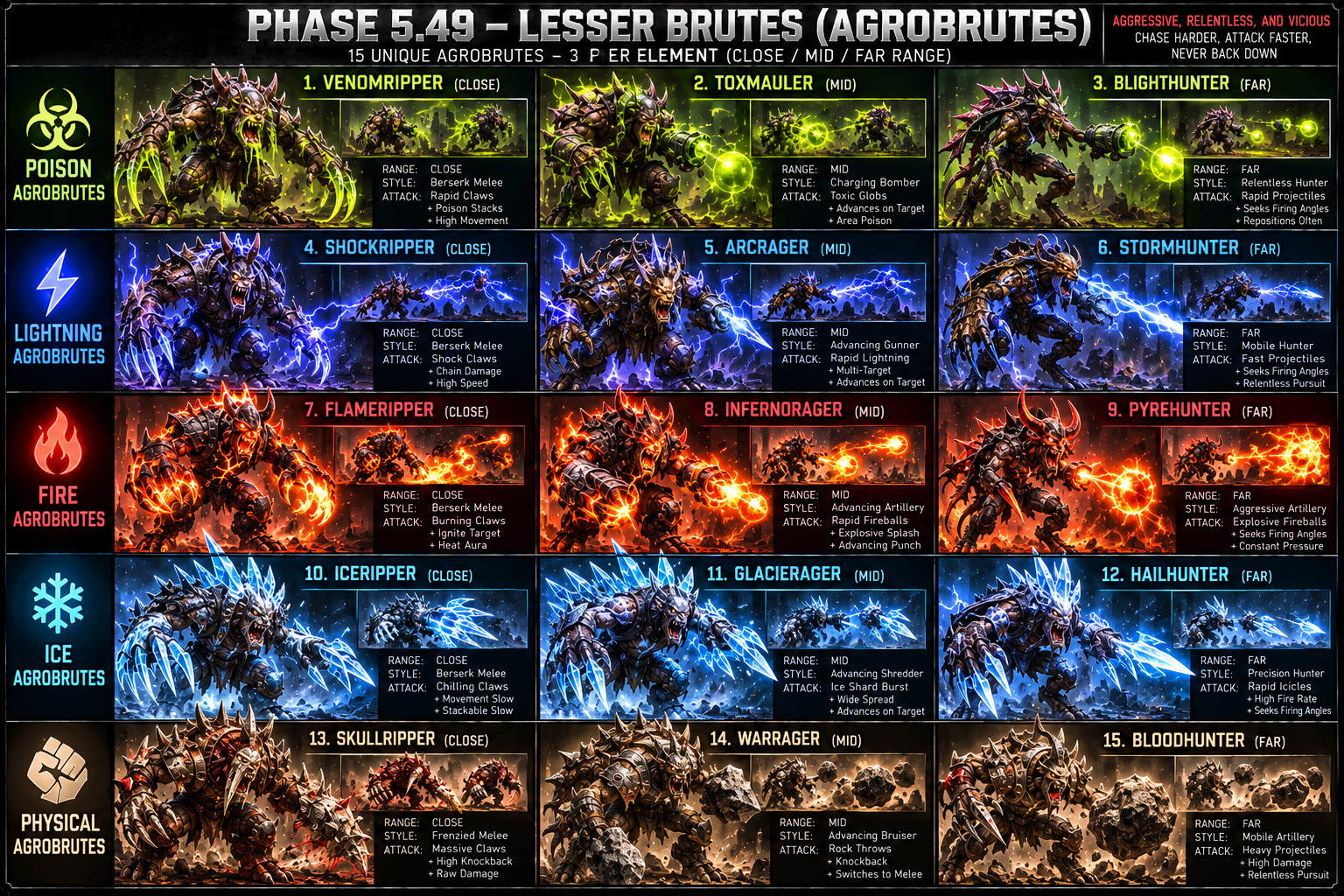
Phase 5 established the custom uRh MonsterHunt creature families, from Lesser Brutes and AgroBrutes through Elite, MiniBoss, and Boss encounters.
Venomfang Elite gameplay.
Stormsplitter Elite gameplay.
Thundermaw Elite gameplay.
Siegeborn Elite gameplay.
Phase 6 — Persistent Inventory System
Current phase: build a secure, server-authoritative inventory and stash foundation that persists player equipment across maps, reconnects, and server restarts while remaining compatible with UT99 mutators and dedicated servers.
- Persistent Player Storage — identify players by ClientID, store inventory server-side in PlayerSavedInventory, track last connection date, and expire inactive records after a configurable period.
- Physical Stash Chest — place one shared chest near the starting PlayerSpawn area; players within 128 UU can open their private stash with F7.
- Diablo II-Style Inventory — Weapons, Pickups, Armor, and Key Items tabs with 10 pages per category and a 5 × 10 grid per page.
- Active Weapon Inventory — support up to 10 normal carried weapons while treating the Translocator as a utility weapon outside that limit.
- Equip & Stash Transactions — preserve weapon class, ammo, item state, category, page, grid position, and supported custom mutator information while preventing loss or duplication.
- Pickup, Armor & Key Item Storage — support standard and compatible custom inventory, stackable pickups, remaining armor strength, persistent keys, map keys, and session keys.
- Death & Map Persistence — protect the permanent stash from death, optionally restore active loadouts, preserve inventory through map changes, and safely handle missing packages.
- Mutator Compatibility — recognize inventory through UnrealScript inheritance where possible, with administrator allow/block lists and safe handling of unknown classes.
- Dedicated Server Security — keep inventory authority on the server and validate every equip/stash request, distance check, item class, inventory slot, and transaction.
- Duplication Protection — guard against rapid requests, repeated clicks, disconnects, deaths, map changes, duplicate network requests, full inventories, and failed actor spawning.
- Inventory Quality of Life — planned sorting, searching, favorites, item locking, tooltips, quantity/ammo indicators, Deposit All, Restock Ammo, and quick-transfer controls.
- Saved Loadouts — prepare named loadouts such as General, Fire, Ice, Poison, Lightning, Physical, Boss, and Custom, switchable only while using the stash.
- Administrator Configuration — configure stash availability, interaction radius, expiration days, weapon limits, pages, stack sizes, persistence behavior, and allowed/blocked classes.
- Future RPG Foundation — design the system for rarity, monster drops, boss weapons, upgrades, crafting, trading, currency, vendors, quests, achievements, elemental equipment, account progression, and expandable stash space.